Oculomics
Our work exploring how the eye links to systemic health
The eye is uniquely positioned among human organs in that it permits direct, non-invasive visualisation of both the vasculature and the central nervous system.
Given this property, ophthalmic structures have long been recognised as potential indicators of systemic health, particularly in relation to neurodegenerative and cardiovascular disease.
In our work - we use deep learning to explore what diseases we can predict using ophthalmic imaging (e.g. colour fundus photographs and optical coherence tomography), how accurate such predictions can be, and the biological mechanisms underpinning these relationships.
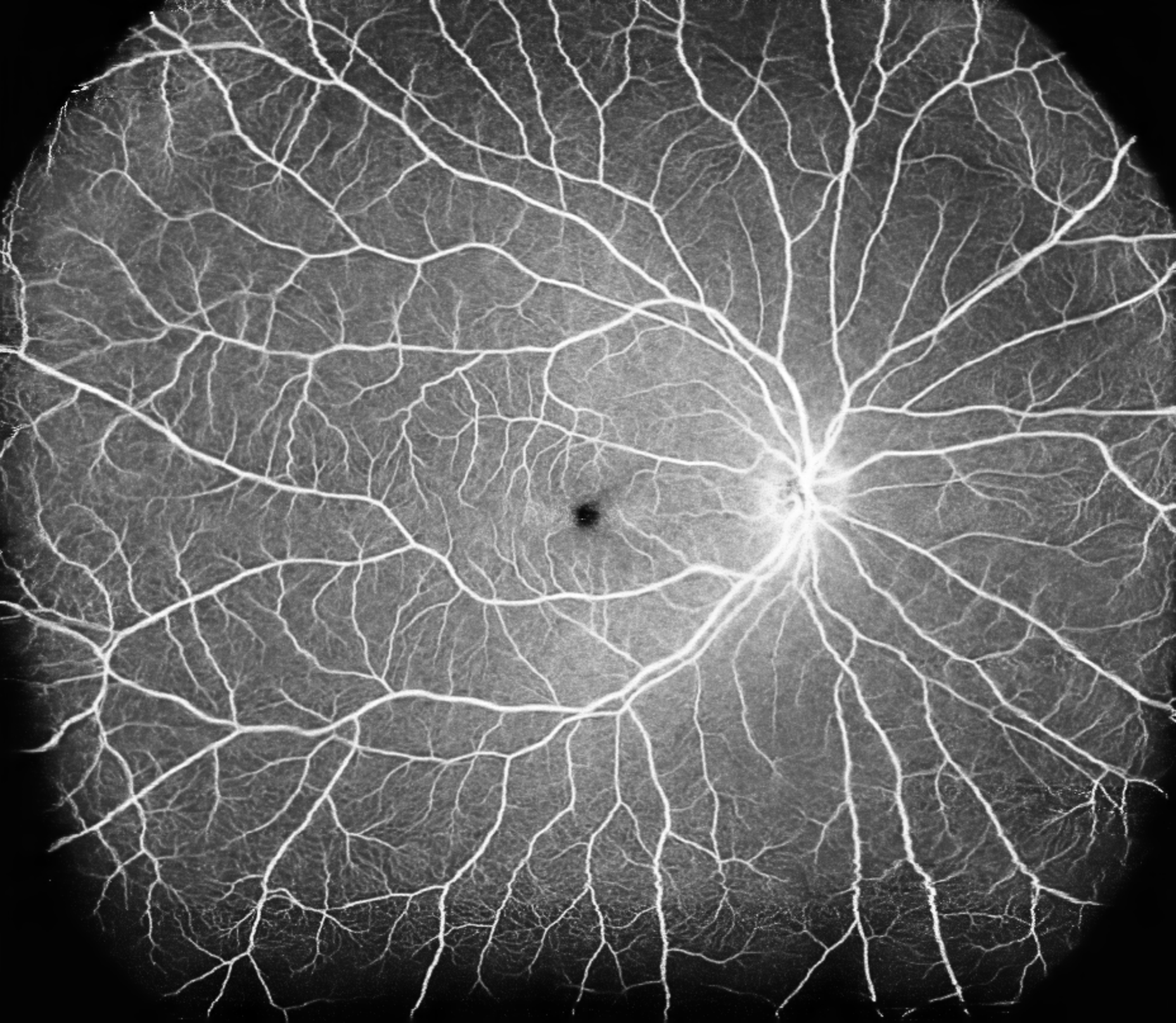

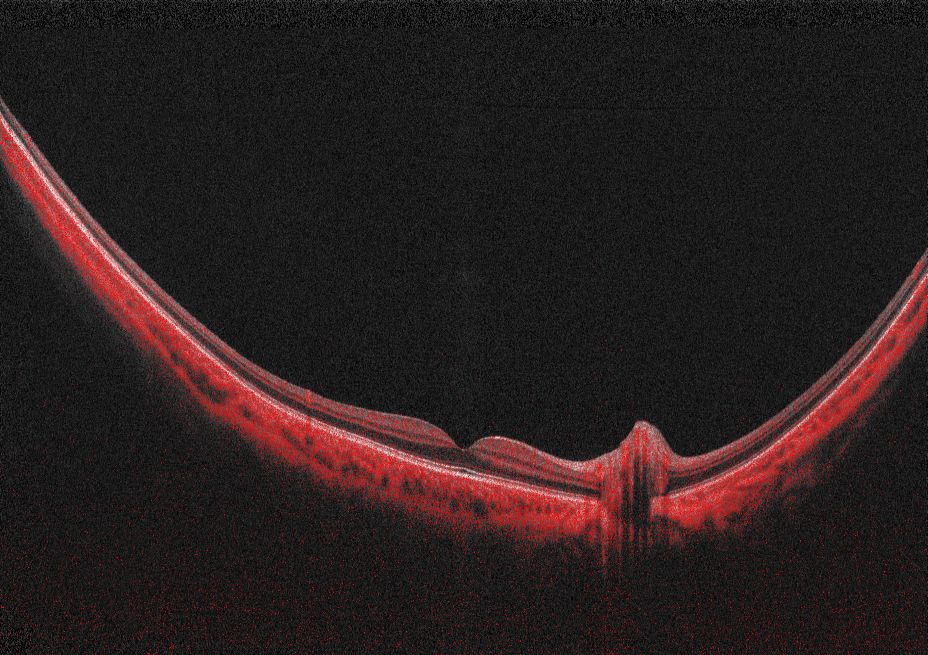

Our group has undertaken a range of studies in this area, ranging from evidence synthesis(Julian et al., 2025) to disease prediction using a range of imaging modalities(Maldonado-Garcia et al., 2024), to exploring the biology that links the eye to the health of the brain and cardiovascular system using deep learning derived phenotypes and multi-omic datasets(Julian et al., 2025).
Moving forwards - we are working to develop large local datasets using routinely collected health data, run prospective studies exploring the performance of models in real-world settings, and to expand our methods to state-of-the-art techniques including leveraging large language models and synthetic data.
References
2025
- Ophthalmic imaging as a measure of cardiovascular and neurological health: a multi-omic analysis of deep-learning derived phenotypesmedRxiv, 2025
2024
- Predicting risk of cardiovascular disease using retinal oct imagingarXiv preprint arXiv:2403.18873, 2024